Capital Chases AI
Welcome to AI8’s weekly newsletter, your ultimate source for curated insights and updates from the dynamic world of venture capital!
From billion-dollar rounds to market-defining shifts, we deliver the intelligence powering the global investment landscape, moving investors and innovators forward. At 8alpha.ai, we’re not waiting for the future of capital, we’re building it. Stay sharp, stay curious, and stay ahead.
STARTUPS
ROUNDS AND UNICORNS
The Week’s 10 Biggest Funding Rounds: NinjaOne Leads With $400M As Large Deals Also Go To Blockchain, Cloud Infrastructure, Biotech And Robotics (Crunchbase, 5 minute read)
NinjaOne (Enterprise Software): Raised $400M in a Series C extension at a $12.3B valuation. The Austin-based IT operations platform reported 70%+ revenue growth in 2025 and achieved profitability in Q1 2026
Digital Asset (Blockchain): Secured $355M in a late-stage round led by a16z crypto. The New York-based blockchain infrastructure company has raised at least $847M since its founding in 2014
TensorWave (AI Infrastructure): Raised $350M in a Series B round led by Magnetar Capital and AMD Ventures. The company provides AMD-powered cloud infrastructure for AI training and inference workloads
Beren Therapeutics (Biotech): Closed a $300M financing package consisting of $135M in equity and $165M in debt. The company develops therapies targeting cholesterol-related diseases
Standard Bots (Robotics): Raised $200M in Series C funding at a $1B valuation. The New York-based company develops AI-native industrial robots, with backing from RoboStrategy and General Catalyst
The AI Startup Funding Boom Is Not A Global Phenomenon (Crunchbase, 4 minute read)
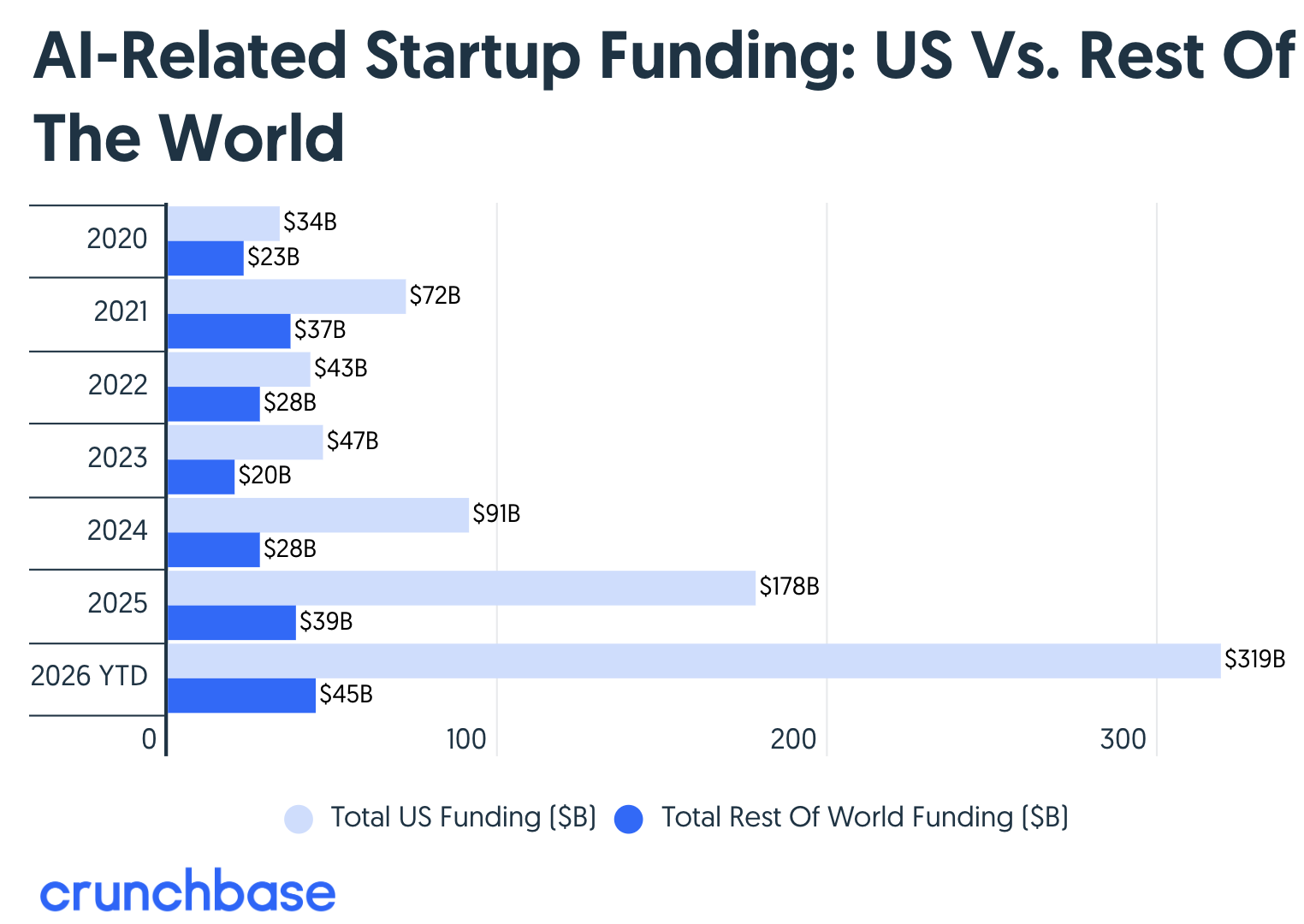
U.S. startups continue to dominate global venture funding, capturing nearly 80% of all startup investment and 88% of AI-related funding ($319B) in 2026. Much of the AI capital has flowed to OpenAI and Anthropic, whose massive funding rounds have reinforced the U.S.'s leadership in the AI race. Outside the U.S., funding activity remains more modest, though several major markets are showing signs of recovery
China has raised more than $33B this year, already surpassing its full-year 2025 total, while U.K. startups have secured $16.5B, led by AI and fintech investments
Other markets, including France, Germany, India, Japan, and South Korea, have remained relatively stable
The growing concentration of capital in a small number of U.S. AI companies has also fueled debate over whether current funding levels reflect sustainable technological leadership or the early signs of an investment bubble
Smaller checks are winning in the middle market—and with less risk (PitchBook, 3 minute read)
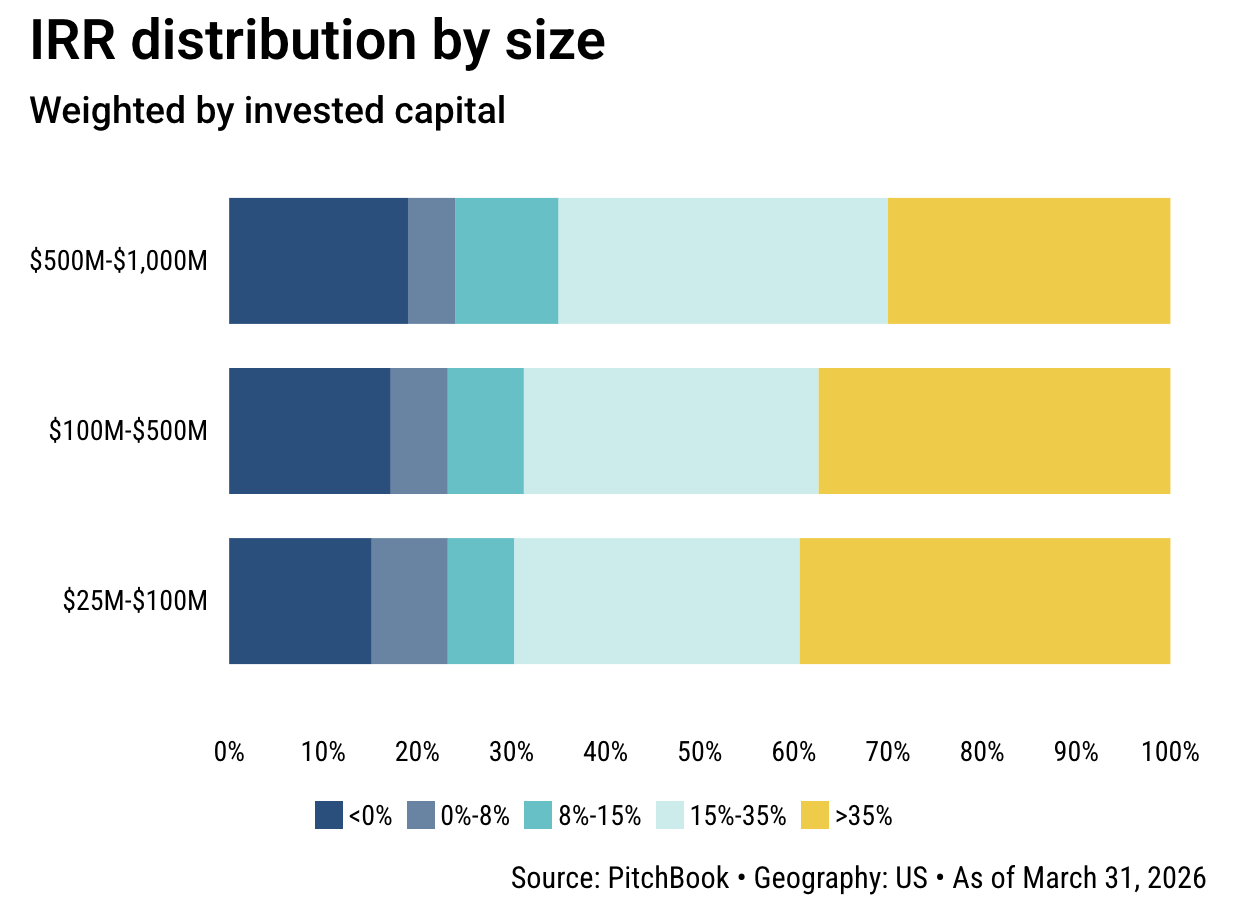
Smaller buyouts in the U.S. lower middle market have generated the strongest private equity returns since 2009, challenging the assumption that larger deals produce better outcomes. According to PitchBook and StepStone data, realized or partially realized lower middle-market deals delivered a 39% gross IRR and 3.3x TVPI, outperforming the largest buyout cohort, which returned 28% gross IRR and 2.7x TVPI
The data challenges the common assumption that smaller buyouts generate higher returns simply because they are riskier
Lower middle-market deals showed a similar share of poor outcomes and fewer outright losses than upper middle-market transactions
The findings raise questions about whether larger buyouts truly offer better risk-adjusted returns and could influence investor allocation decisions as many middle-market PE firms face fundraising challenges
ECONOMIC SNAPSHOT
US and UK central banks expected to keep interest rates on hold amid Iran peace deal (The Guardian, 4 minute read)
The Federal Reserve is expected to keep interest rates unchanged at 3.5%–3.75% this week, as policymakers assess whether the recent U.S.-Iran peace agreement will help reduce inflation pressures. The decision will be closely watched because it marks one of the first major policy meetings under Fed Chair Kevin Warsh, President Trump’s appointee. The Fed faces a delicate balancing act. U.S. inflation climbed from 2.4% in February to 4.2% in May, reaching its highest level in three years, largely driven by higher energy prices during the Middle East conflict
However, the reopening of the Strait of Hormuz and the subsequent decline in oil prices could help ease inflation later this year, reducing pressure for additional rate hikes
Markets will be focused on Warsh’s outlook for inflation and interest rates
While investors had feared further rate hikes, improving geopolitical conditions have increased expectations that the Fed may remain on hold until inflation shows clearer signs of easing
Stocks surge as US-Iran deal ignites global rally (Financial Times, 5 minute read)
Global markets rallied after the U.S. and Iran reached an agreement to reopen the Strait of Hormuz, easing concerns about energy supply disruptions and inflation. The S&P 500 rose 1.3%, the Nasdaq gained 2.2%, and European stocks reached record highs. Oil prices fell sharply, with Brent crude dropping 4.8% to $83.15 per barrel, its lowest level in more than three months, as investors anticipated improved energy supplies and lower inflationary pressures
The agreement also boosted expectations that central banks may face less pressure to raise interest rates
Government bond yields declined across the U.S. and Europe, while markets pushed back expectations for future rate hikes
Technology and AI-related stocks led gains globally, helped by continued enthusiasm following SpaceX’s IPO, whose shares rose another 6.8% after jumping 19% on their first trading day
Anthropic to meet White House over AI tool suspension (BBC, 5 minute read)
Anthropic executives, including CEO Dario Amodei, are scheduled to meet with senior U.S. Commerce Department officials after the government ordered the company to suspend access to its newest AI models, Fable 5 and Mythos 5, over national security concerns. The government reportedly identified a potential "jailbreak" vulnerability that could allow the models to be used in unintended ways, although Anthropic says it has only received limited verbal evidence of the issue and is seeking further clarification
The dispute marks the latest tension between Anthropic and the U.S. government, following earlier disagreements over military use of the company's AI systems
Anthropic had previously described Fable 5 as its most capable public model to date and warned that its advanced capabilities carry greater risks
The decision has raised concerns across the tech industry, with executives and cybersecurity experts calling on the government to remove the restrictions and use a more transparent process to assess AI risks
IPO & EXITS
SpaceX IPO raised $10bn more than thought (BBC, 4 minute read)
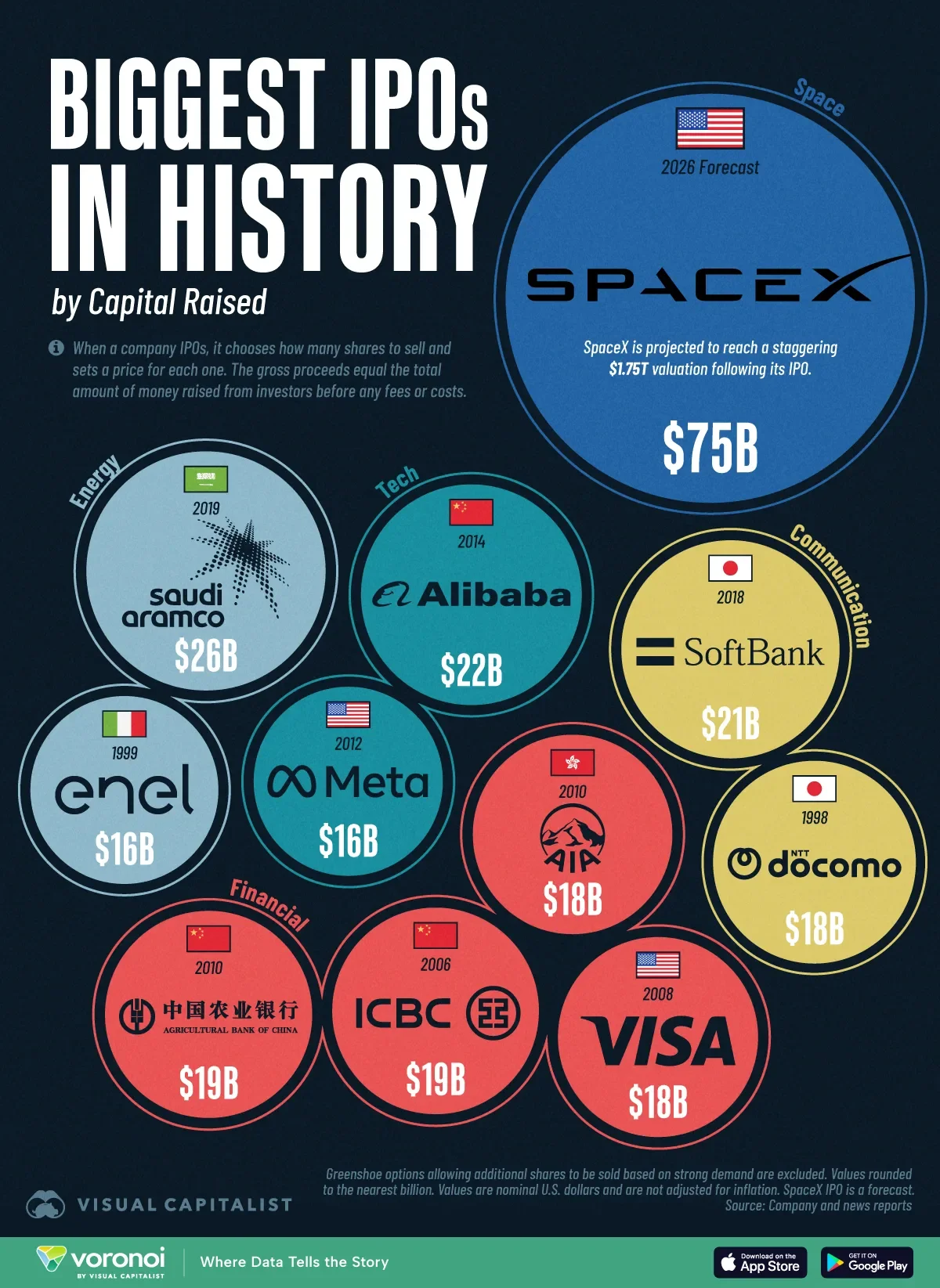
SpaceX completed the largest IPO in history, ultimately raising $85.7B, including an additional $10B through a fully exercised greenshoe option on top of the originally announced $75B offering. The IPO valued the company at approximately $1.8T, making it one of the most valuable publicly traded companies globally. Investor demand significantly exceeded expectations, driving the stock from its IPO price of $135 to $184 on its first full trading day, a gain of more than 36%. The successful debut also pushed Elon Musk, who owns roughly 50% of SpaceX, into trillionaire status according to Bloomberg estimates
The company plans to use the proceeds to expand its core businesses, including Starlink, which generated roughly 70% of SpaceX's first-quarter revenue, its launch operations, and its growing AI initiatives
The IPO highlights strong investor demand for AI, communications, and space companies
Some analysts question whether SpaceX’s $1.8T valuation is sustainable given ongoing losses and growing competition
Ranked: The Biggest IPOs in History—and Where SpaceX Fits In (Visual Capitalist, 4 minute read)
2026 is shaping up to be one of the biggest years for technology IPOs in history. While SpaceX has already completed its record-breaking public debut, attention is now shifting to OpenAI and Anthropic, both of which are pursuing public listings and carry valuations approaching or exceeding $1 trillion. Their potential offerings would join a short list of companies ever to reach trillion-dollar valuations and could further accelerate investor interest in artificial intelligence as the defining investment theme of the decade. The upcoming listings also reflect a broader shift in capital markets
Historically, the largest IPOs came from sectors such as energy, finance, and telecommunications, led by companies like Saudi Aramco ($25.6B IPO), Alibaba ($21.8B), and SoftBank ($21.3B)
Today, the next generation of mega-listings is being driven by companies building AI models, computing infrastructure, and advanced software platforms
Together, these offerings could reshape public markets and test investor demand for high-growth AI companies
8alpha.ai is an AI fintech transforming cash-generating businesses into scalable, AI-powered companies. We provide revenue-based financing and hands-on AI transformation, delivering no zeros with unlimited upside. We’re the architects building financial infrastructure for the next generation of investors and startups.
Become part of our revolution.
Happy reading,
8alpha.ai’s Research & Investment Team