The New AI Playbook
Welcome to AI8’s weekly newsletter, your ultimate source for curated insights and updates from the dynamic world of venture capital!
From billion-dollar rounds to market-defining shifts, we deliver the intelligence powering the global investment landscape, moving investors and innovators forward. At 8alpha.ai, we’re not waiting for the future of capital, we’re building it. Stay sharp, stay curious, and stay ahead.
STARTUPS
ROUNDS AND UNICORNS
The Week’s 10 Biggest Funding Rounds: Megarounds Proliferate, Led By Enterprise Software, AI, And Space Tech (Crunchbase, 5 minute read)
Ramp (Finance Software): Raised $750M at a $44B valuation in a round led by Iconiq, GIC, and Ontario Teachers’ Pension Plan
Impulse Space (Space Tech): Secured $500M Series D led by 137 Ventures and Banner VC, bringing total funding to over $1B
Supabase (AI Developer Tools): Raised $500M led by GIC at a $10.5B valuation to expand its developer and AI application platform
Flourish (Foundational AI): Closed $500M in initial funding from investors including Jeff Bezos, Lux Capital, and Google Ventures to develop brain-inspired AI models
Helion (Fusion Energy): Raised $465M Series G led by Thrive Capital at a $15.5B valuation, bringing total funding to at least $1.5B
ECONOMIC SNAPSHOT
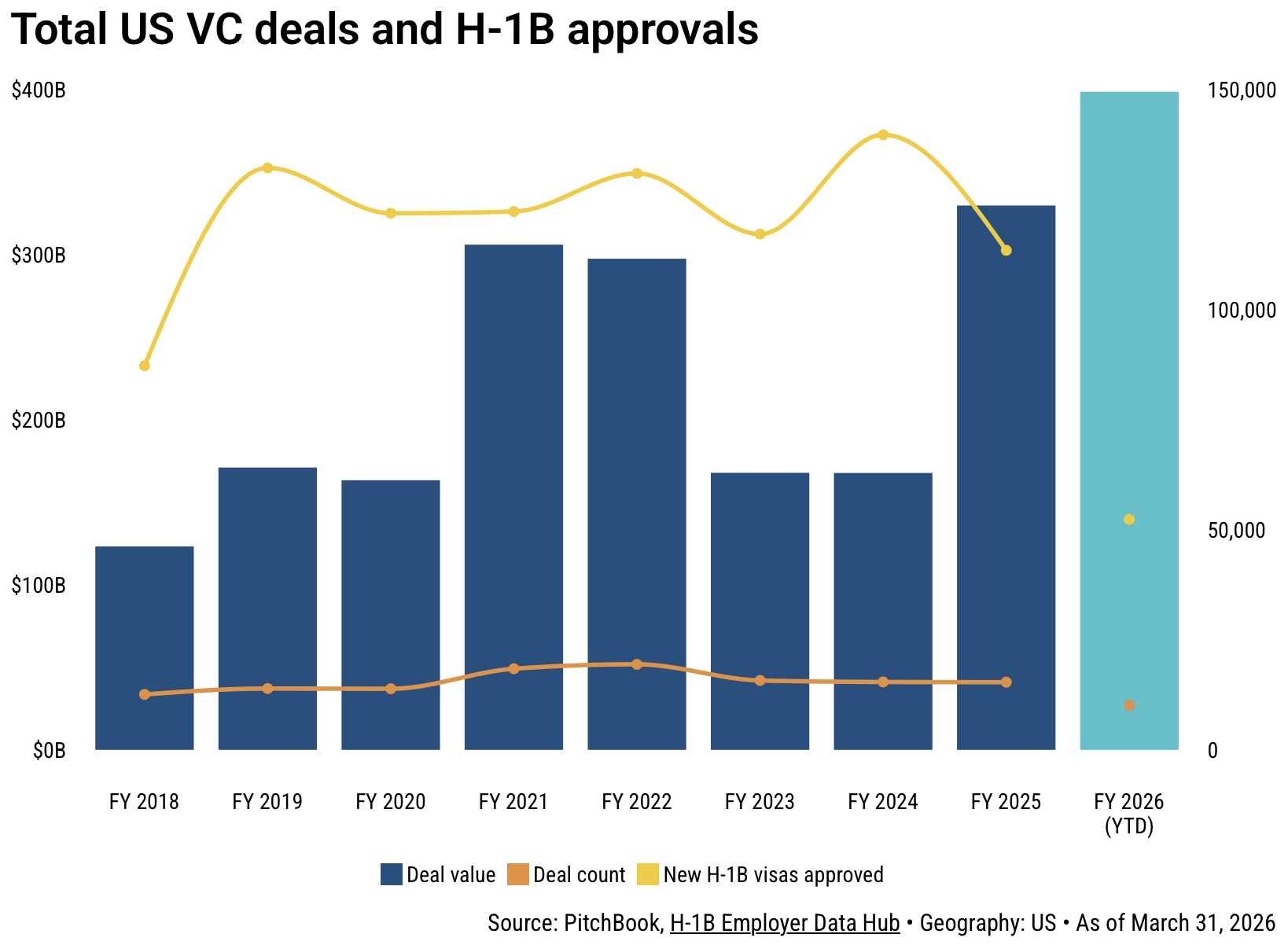
Trump’s $100K H-1B fee was meant to slow foreign tech hiring. It may not be working (PitchBook, 5 minute read)
Despite a $100,000 fee on first-time H-1B visa approvals, the largest U.S. startups continue to aggressively recruit foreign talent, particularly in AI. OpenAI received 27 new H-1B approvals in the first half of fiscal 2026, already surpassing the 21 approvals it received during all of fiscal 2025, while Stripe's approvals increased from 23 to 46. Many top AI companies are also relying on visa transfers rather than new applications, with OpenAI hiring 126 H-1B transfers, Databricks 89, and Anthropic 48 during the period
Employment experts say the fee has had limited impact on well-funded startups sitting on billions of dollars in capital, but has become a significant barrier for smaller companies with fewer resources
The result is a widening talent gap, where the largest AI firms continue attracting top global engineers and researchers while many smaller startups scale back foreign hiring
Anthropic says the world should have option to ‘pause’ on AI (The Guardian, 5 minute read)
Anthropic renewed its focus on AI safety by warning about the long-term risks of recursive self-improvement, a scenario in which AI systems become capable of designing increasingly advanced versions of themselves. The company said current trends in model performance suggest that, given sufficient computing power, future systems could potentially contribute to developing their own successors, raising concerns about maintaining human control over advanced AI
Anthropic proposed discussions involving policymakers, researchers, and industry leaders, including consideration of a temporary global pause on AI development
At the same time, the company revealed that more than 80% of the code integrated into its codebase is now generated by Claude, highlighting the growing role of AI in software development
The move comes as Anthropic approaches a potential $1T IPO and expands its government partnerships
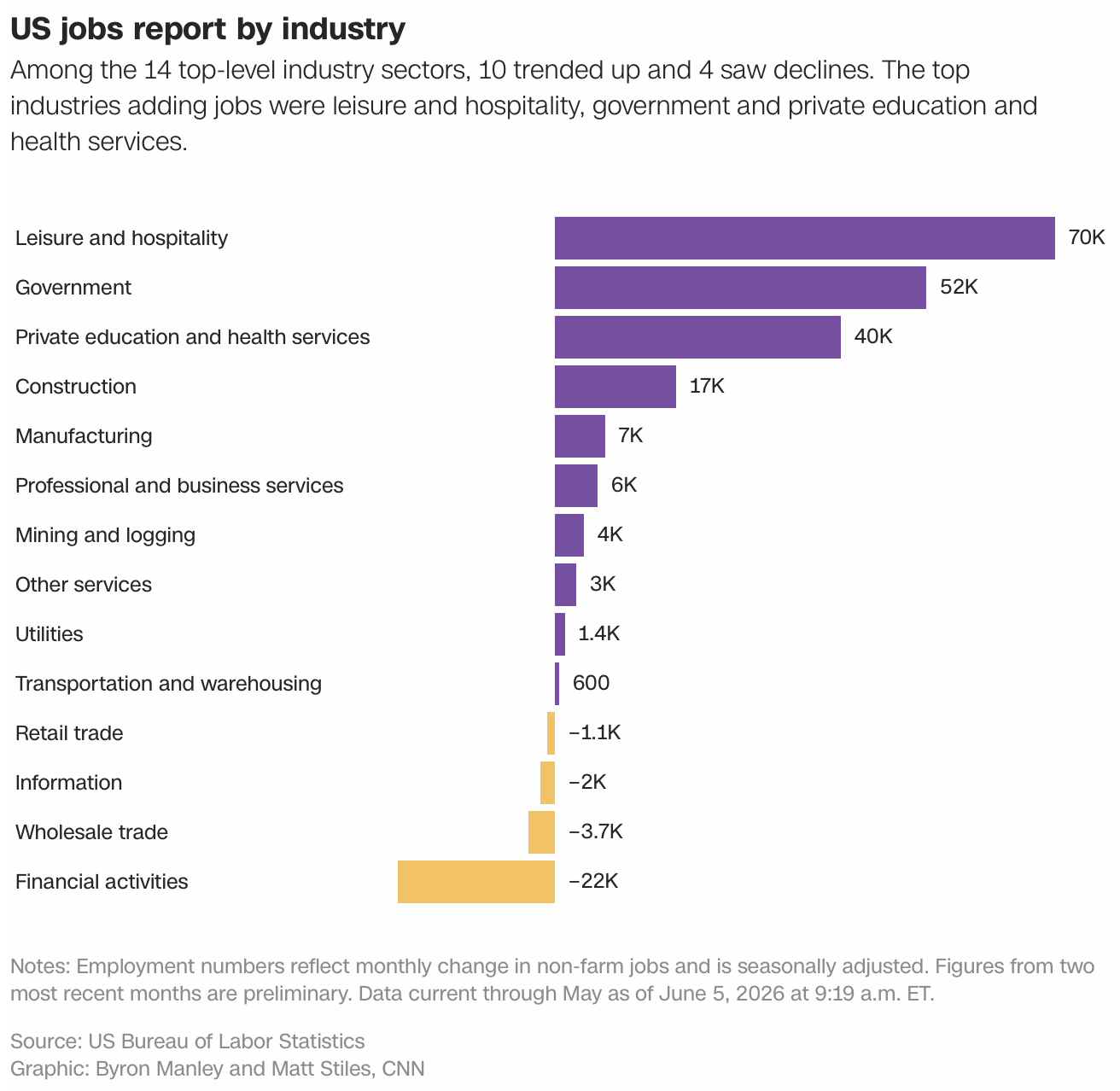
The US economy added 172,000 jobs last month, extending the labor market rebound (CNN, 6 minute read)
The U.S. labor market showed surprising resilience in May, adding 172,000 jobs, well above expectations of 105,000, while the unemployment rate remained steady at 4.3%. Job growth was also revised higher for previous months, bringing the three-month average to 188,000 jobs per month, the strongest pace since early 2024. Hiring broadened beyond healthcare, with leisure and hospitality adding 70,000 jobs, government 52,000, and healthcare and social assistance 47,200
However, wage growth slowed to 3.4%, down from 3.6% in April, while inflation is expected to exceed 4%, meaning real wages are likely declining
Economists note that although employment remains strong, rising energy prices, persistent inflation, and cost-of-living pressures continue to weigh on households and could become a headwind for future economic growth
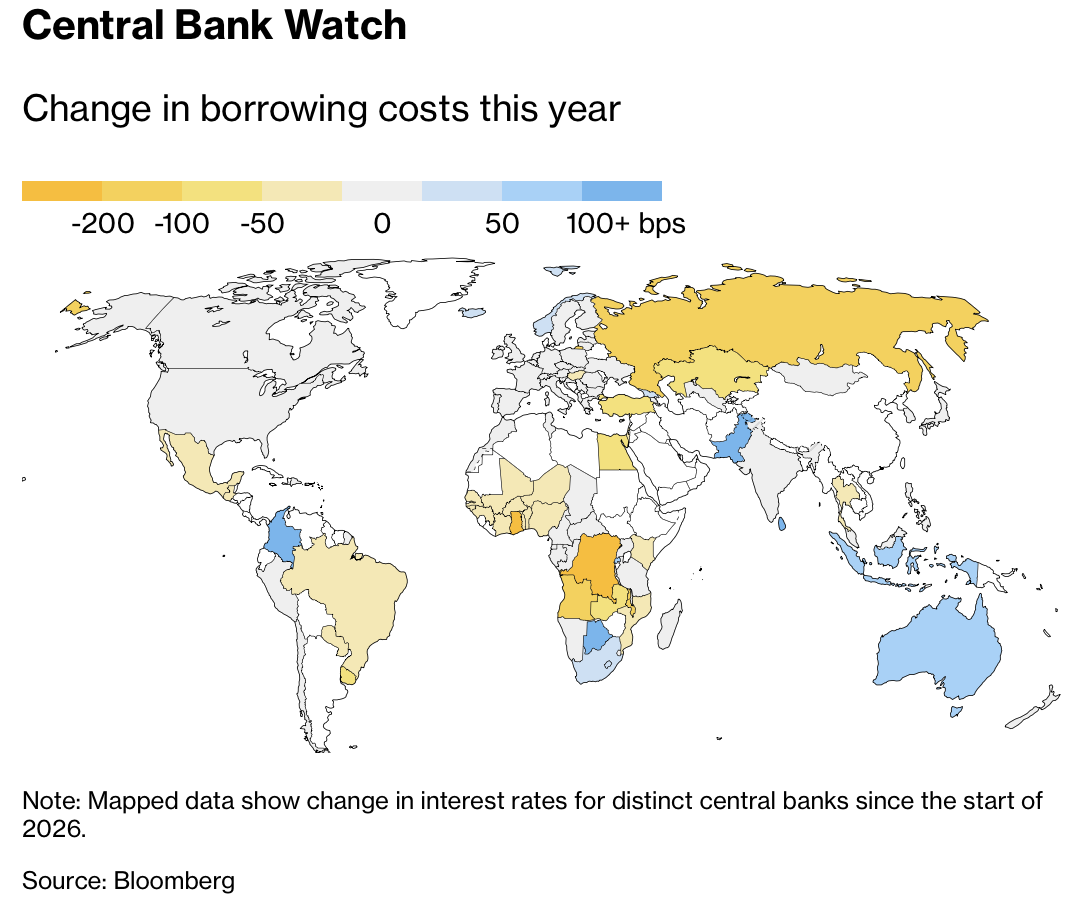
Charting the Global Economy: Jobs, Inflation Feed Rate-Hike Bets (Bloomberg, 4 minute read)
Global economic risks remain centered on the combination of slowing growth, rising inflation, and geopolitical tensions. The OECD projects global GDP growth to slow from 3.4% in 2025 to 2.8% in 2026, while global inflation rises from 3.4% to 4.0%, largely due to higher energy prices linked to the Iran conflict. In the U.S., manufacturing activity expanded at its fastest pace since 2022, and spending on data-center construction exceeded $50B in April for the first time, highlighting continued AI-driven investment
Meanwhile, eurozone inflation rose to 3.2%, strengthening expectations of further monetary tightening, while South Korea’s exports surged 53.2% year-over-year on strong semiconductor demand
Policymakers and investors remain focused on persistent inflation and geopolitical risks
The key question is whether these pressures will outweigh the benefits of continued investment in AI, infrastructure, and technology
IPO & EXITS
Anthropic Files to Go Public, Setting Stage for Huge I.P.O (The New York Times, 6 minute read)
Anthropic has confidentially filed for an IPO, positioning itself alongside SpaceX and OpenAI in what could become one of the largest waves of technology listings in history. The company recently raised $65B at a $900B valuation (before the new capital), surpassing OpenAI’s last reported valuation of $730B, and reported an annualized revenue run rate exceeding $47B. Founded in 2021, Anthropic has differentiated itself by focusing on AI coding tools and enterprise customers, with strong adoption of its Claude models driving rapid growth
To support growing demand, Anthropic recently secured access to more than 220,000 AI chips through a partnership with SpaceX's Colossus data center
A successful IPO would intensify competition among leading AI firms and mark another major milestone in the commercialization of AI
OpenAI files for US IPO after Anthropic as AI giants head to public markets (Reuters, 5 minute read)
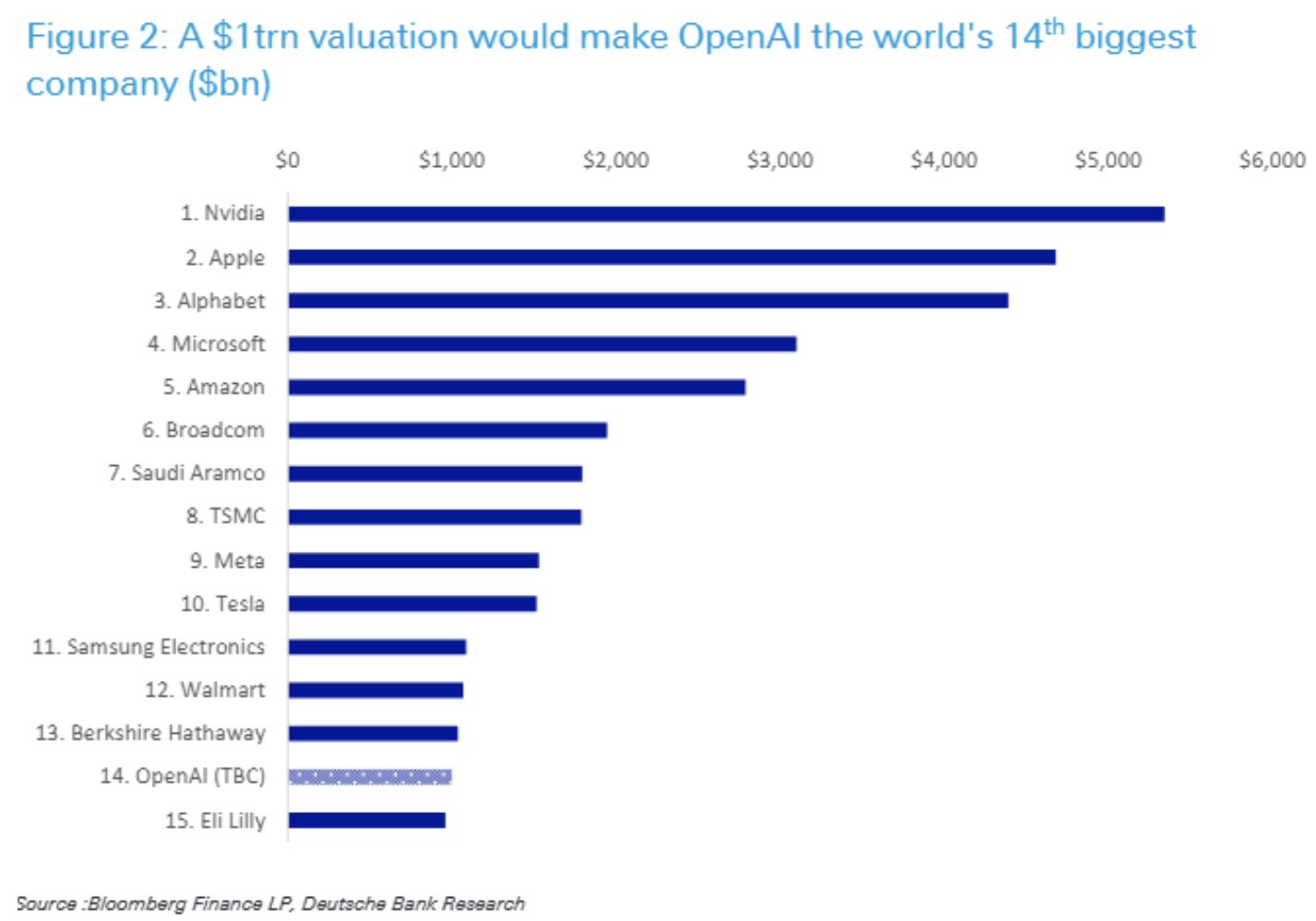
OpenAI has confidentially filed for an IPO, joining SpaceX and Anthropic in what could become one of the largest technology listing waves in history. OpenAI is targeting a valuation of up to $1T, following a recent fundraising round that valued the company at $840B. The company disclosed that ChatGPT now serves more than 900 million weekly active users and over 50 million subscribers, while generating approximately $2B in monthly revenue, up from roughly $1B in quarterly revenue at the end of 2024
The IPO would place OpenAI alongside SpaceX ($1.75T target valuation) and Anthropic ($965B valuation), creating a wave of trillion-dollar tech listings
Some analysts warn these mega-IPOs could absorb capital that might otherwise flow to smaller public offerings
The filing follows OpenAI’s legal victory over Elon Musk and a restructuring aimed at improving its ability to raise capital
SpaceX IPO is coming to your 401(k). Should you be concerned? (Yahoo Finance, 6 minute read)
SpaceX’s upcoming IPO, targeting a valuation of approximately $1.8T and raising about $75B, could quickly become part of millions of retirement portfolios as major index providers accelerate the inclusion of mega-cap IPOs. Under new rules, SpaceX could enter the Russell 1000 within about a week and the Nasdaq 100 within roughly 15 trading days, even though the company has not yet achieved annual profitability. While some analysts argue this could expose passive investors to a highly valued company, others note that its initial weighting in diversified index funds would remain relatively small. The debate reflects broader concerns about the growing influence of index inclusion on valuations and investor demand
Critics argue that faster index inclusion could allow insiders to sell shares at elevated valuations while shifting risk to passive investors
Supporters counter that diversified index funds limit exposure, with SpaceX likely representing only a small portion of most retirement portfolios initially
The IPO is also testing how major indexes balance investor protection rules with the growing size of trillion-dollar technology companies
8alpha.ai is an AI fintech transforming cash-generating businesses into scalable, AI-powered companies. We provide revenue-based financing and hands-on AI transformation, delivering no zeros with unlimited upside. We’re the architects building financial infrastructure for the next generation of investors and startups.
Become part of our revolution.
Happy reading,
8alpha.ai’s Research & Investment Team