The Affordability Squeeze
Welcome to AI8’s weekly newsletter, your ultimate source for curated insights and updates from the dynamic world of venture capital!
From billion-dollar rounds to market-defining shifts, we deliver the intelligence powering the global investment landscape, moving investors and innovators forward. At 8alpha.ai, we’re not waiting for the future of capital, we’re building it. Stay sharp, stay curious, and stay ahead.
STARTUPS
ROUNDS AND UNICORNS
The Week’s 10 Biggest Funding Rounds: Anthropic Dominates In An Otherwise Slower Week For Megarounds (Crunchbase, 5 minute read)
Anthropic (Foundational AI): Raised $65 billion in a Series H round, more than doubling its valuation to $965 billion. The financing was led by Altimeter Capital, Dragoneer, Greenoaks, and Sequoia Capital
Cognition (AI Software Development): Secured over $1 billion at a $26 billion valuation. The San Francisco-based creator of AI coding agent Devin was backed by Lux Capital, General Catalyst, and 8VC
Stord (Logistics): Raised $250 million in Series F funding, reaching a $3 billion valuation. The Atlanta-based company provides fulfillment infrastructure, software, and AI tools for independent brands
OpenRouter (AI for Developers): Closed a $113 million Series B round led by CapitalG. The New York-based startup operates a marketplace for AI models
Corgi Insurance (Insurtech): Raised $106 million in Series B1 funding led by TCV, achieving a $2.6 billion valuation. The round follows a $160 million Series B completed just three weeks earlier at a $1.3 billion valuation
Venture Capital Is Concentrating Faster Than Ever. What Happens To Everyone Else? (Crunchbase, 5 minute read)
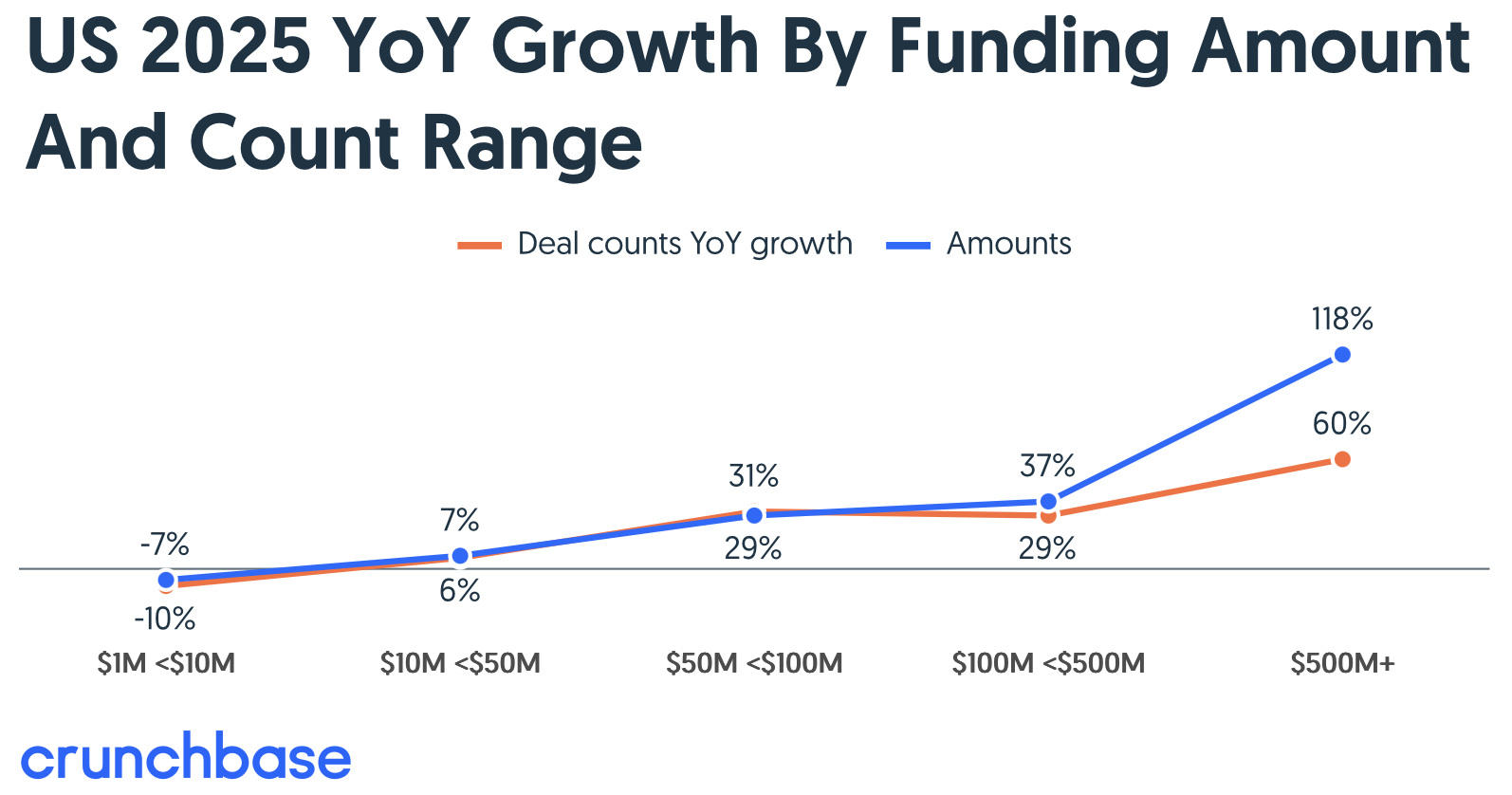
Venture capital is becoming increasingly concentrated among a small group of high-growth companies, particularly in AI and frontier technologies. In 2025, 70% of all U.S. venture funding (more than $200B) went to just 389 companies raising rounds above $100M, while $90B flowed to only six companies that each raised more than $5B. By comparison, roughly 6,000 startups shared the remaining $88B in venture funding
The trend has intensified in 2026, with 80% of startup investment through April going to rounds above $500M across just 29 companies
AI funding remains strong, but investors are debating whether AI giants like OpenAI and Anthropic will limit opportunities for startups or help expand the broader ecosystem
ECONOMIC SNAPSHOT
US first-quarter GDP growth revised lower to 1.6% pace (Reuters, 3 minute read)
U.S. economic growth was weaker than previously estimated in the first quarter, with GDP expanding at an annualized 1.6%, down from the initial 2.0% estimate and slowing from 0.5% growth in the fourth quarter. The revision reflected weaker consumer spending and lower inventory investment, while business investment remained strong, with equipment spending rising 17.2%, driven largely by AI-related infrastructure and technology investment
Consumer spending grew 1.4%, below earlier estimates and signaling softer household demand
Corporate profit growth slowed sharply to $40.4B, down from $246.9B in the previous quarter
Economists expect growth to face additional pressure in the coming months as the Iran conflict contributes to higher energy prices, inflation, and weaker household purchasing power
5 economic signals suggest U.S. consumers are feeling the strain (CBS News, 6 minute read)
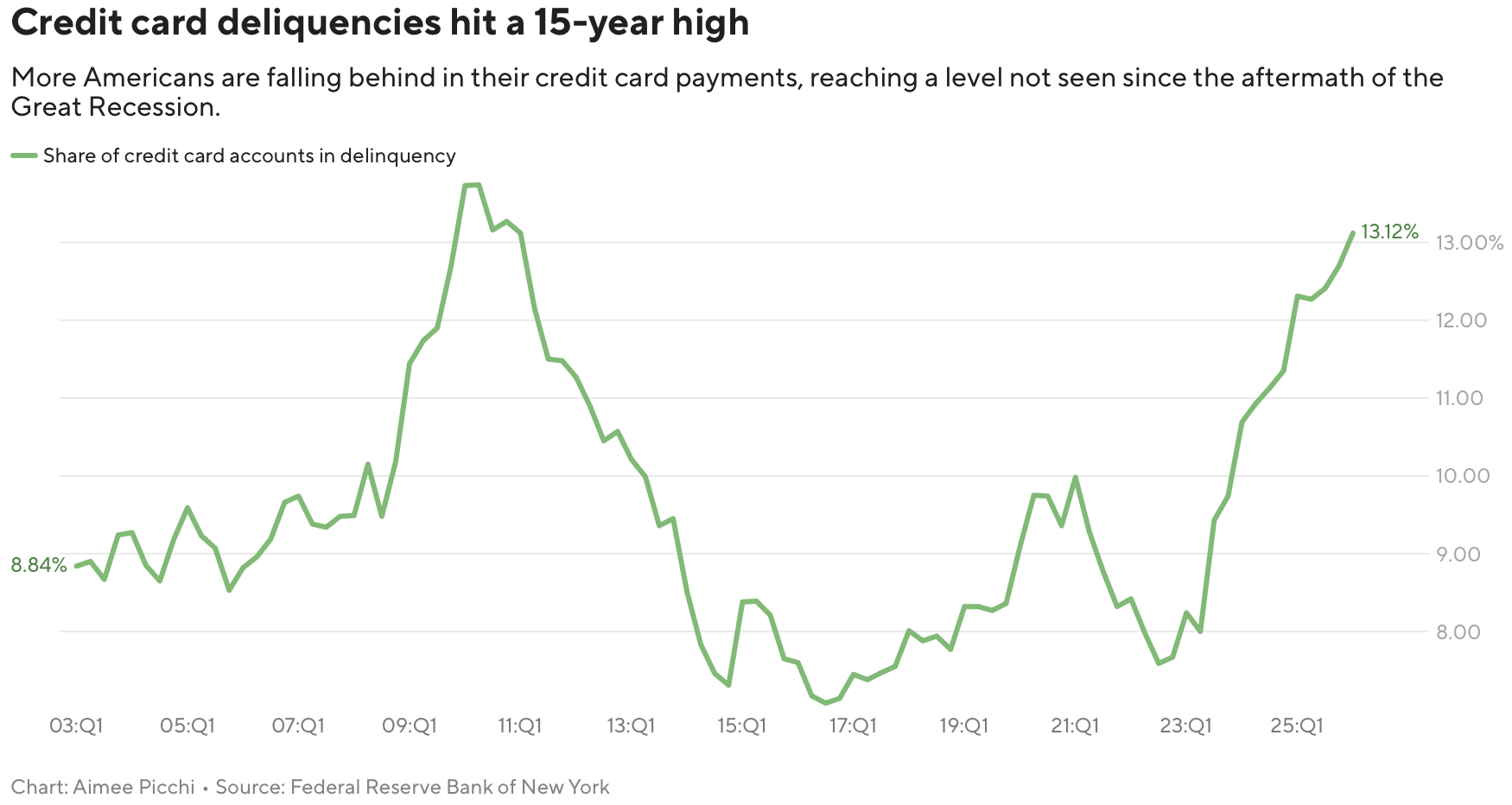
Despite continued consumer spending, signs of financial strain are becoming more visible across U.S. households as inflation outpaces income growth. Consumer spending still accounts for roughly 70% of U.S. economic activity, but inflation-adjusted household income has fallen by more than 1% over the past year, marking one of the sharpest declines since the 2009 Great Recession. At the same time, 13.1% of credit card accounts are now delinquent, the highest level since 2011, while the personal savings rate has fallen to just 2.6%, down from 5.5% a year ago and its lowest level in 22 years
More Americans are also borrowing from their retirement accounts, with 19.2% of 401(k) accounts carrying loans and hardship withdrawals rising to 2.5%
Economists warn that weaker household finances could eventually slow economic growth
Inflation is at a three-year high — and now many Americans are burning through their savings (CNN, 5 minute read)
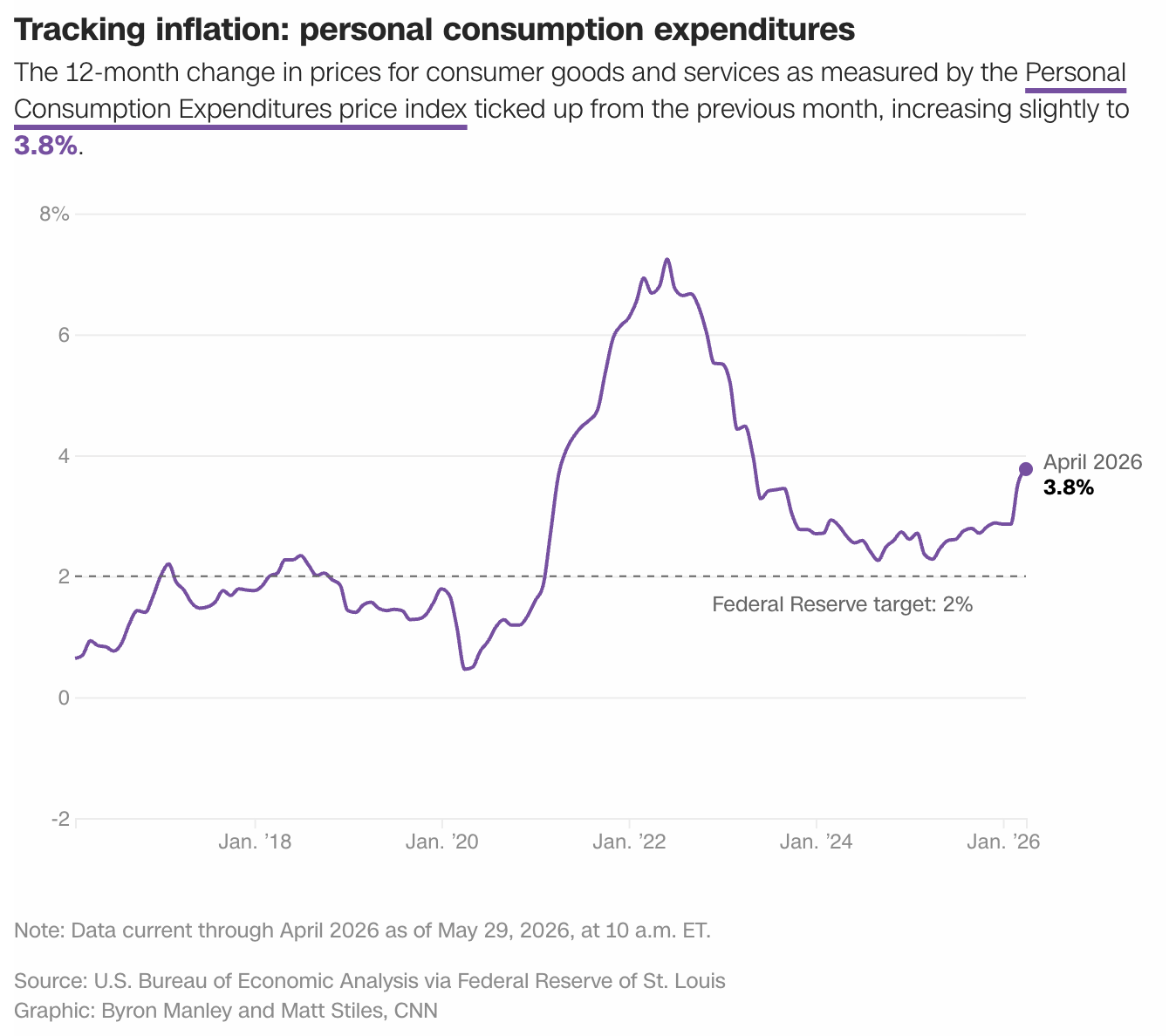
Higher energy prices continued to strain U.S. households in April, pushing the Federal Reserve’s preferred inflation measure (PCE) to 3.8%, its highest level in three years. While consumer spending rose 0.5%, inflation-adjusted spending increased only 0.1%, highlighting weakening purchasing power. Household finances also showed signs of stress, with disposable income falling 0.1%, real disposable income declining 0.5%, and the personal savings rate dropping to 2.6%, its lowest level since June 2022 and down from 4.3% at the start of the year
Inflation remains a concern: Higher costs for fuel, food, housing, and utilities continue to pressure consumers and keep interest rates elevated
Consumer spending remained strong, helping support economic activity
AI-related business investment stayed robust, contributing to 1.6% GDP growth in Q1, with solid growth expected to continue in Q2
IPO & EXITS
The SpaceX IPO Filing Looks Nothing Like Those Of The Elite Group Of Tech Giants It’s Hoping To Join (Crunchbase, 5 minute read)
SpaceX filed its IPO prospectus seeking a valuation of more than $1.5T and aiming to raise up to $80 billion, potentially making it the largest IPO in history. Despite its leadership in space technology and AI, the company reported a net loss of $4.28 billion in Q1 2026, a more than 700% increase year-over-year, while generating $4.69 billion in revenue, up 15% from the prior year. This financial profile contrasts sharply with the early public-market debuts of today’s trillion-dollar technology giants
Unlike Google, Microsoft, Apple, and Nvidia, SpaceX is pursuing an IPO with multi-billion-dollar losses rather than profits or modest losses
Founded in 2002, SpaceX is 24 years old, significantly older than most high-growth companies at IPO
Despite generating $4.7 billion in Q1 revenue, SpaceX's $4.3 billion quarterly loss makes it a major outlier among mega-cap tech IPOs
Anthropic raises $65 billion, nears $1T valuation ahead of IPO (TechCrunch, 4 minute read)
Anthropic raised $65B in a Series H round at a $965B valuation, bringing the company close to a potential IPO and making it one of the most valuable private AI companies in the world. The round included major investors such as Sequoia, Coatue, Capital Group, Blackstone, Fidelity, and strategic partners including Samsung, SK Hynix, and Micron, while $15B came from previously committed hyperscaler investments, including $5B from Amazon
Anthropic said it will use the capital to expand compute infrastructure, scale Claude, and advance AI safety research
The company’s annualized revenue has reportedly surpassed $47B, and it is expected to achieve its first operating profit as revenue grows roughly 130% year-over-year
The fundraising comes amid intensifying competition with OpenAI, which raised $122B at an $852B valuation, as both companies move closer to potential public listings
Can the OpenAI and Anthropic IPOs Live Up to Expectations? (Bloomberg, 4 minute read)
OpenAI and Anthropic are expected to join the upcoming wave of major tech IPOs, potentially going public as early as fall 2026 after reaching private valuations of $852 billion and $965 billion, respectively. Despite their enormous valuations, neither company is profitable, and both require significant capital to fund the computing infrastructure behind their AI models. Investors are being asked to bet that rapid revenue growth will eventually translate into sustainable profits
OpenAI surpassed $20 billion in annualized revenue in 2025, while Anthropic's run-rate revenue reached $30 billion in 2026, up from $19 billion months earlier
An IPO would give both companies access to more capital but also subject them to greater investor scrutiny and market volatility
Key risks include AI overvaluation concerns, slowing growth, and regulatory scrutiny around AI safety and military use
The AI boom has boosted the broader ecosystem, with Nvidia gaining over 1,200% since ChatGPT's launch and adding $4.8T in market value
8alpha.ai is an AI fintech transforming cash-generating businesses into scalable, AI-powered companies. We provide revenue-based financing and hands-on AI transformation, delivering no zeros with unlimited upside. We’re the architects building financial infrastructure for the next generation of investors and startups.
Become part of our revolution.
Happy reading,
8alpha.ai’s Research & Investment Team