The Trillion-Dollar AI Race
Welcome to AI8’s weekly newsletter, your ultimate source for curated insights and updates from the dynamic world of venture capital!
From billion-dollar rounds to market-defining shifts, we deliver the intelligence powering the global investment landscape, moving investors and innovators forward. At 8alpha.ai, we’re not waiting for the future of capital, we’re building it. Stay sharp, stay curious, and stay ahead.
STARTUPS
ROUNDS AND UNICORNS
The Week’s 10 Biggest Funding Rounds: Massive Deals For Medical Devices, Futuristic AI Gadgets And Frontier Labs Lead (Crunchbase, 5 minute read)
MiRus (Healthcare): Raised $1.5B in funding led by Boston Scientific, which acquired a 34% stake. The orthopedic and spinal technology company has now raised $1.6B total
Hark (AI): Secured a $700M Series A led by Parkway Venture Capital, with backing from Nvidia, Intel Capital, AMD, Qualcomm Ventures, ARK, and Salesforce Ventures. The startup is developing personalized AI and next-generation hardware
Modal Labs (AI Infrastructure): Raised $355M at a $4.65B valuation. The company’s ARR reportedly surged from $60M to $300M since September as enterprise AI coding adoption accelerated
Decart (AI): Raised $300M at a nearly $4B valuation. The frontier AI startup has now raised roughly $456M total, with backing from Benchmark, Sequoia, Nvidia, and Andrej Karpathy
Amca (Aerospace & Defense): Raised $300M Series B at a valuation above $1B. The company focuses on aerospace manufacturing and supply-chain technologies and has raised $376.5M overall
Venture Capital Is Concentrating Faster Than Ever. What Happens To Everyone Else? (Crunchbase, 5 minute read)
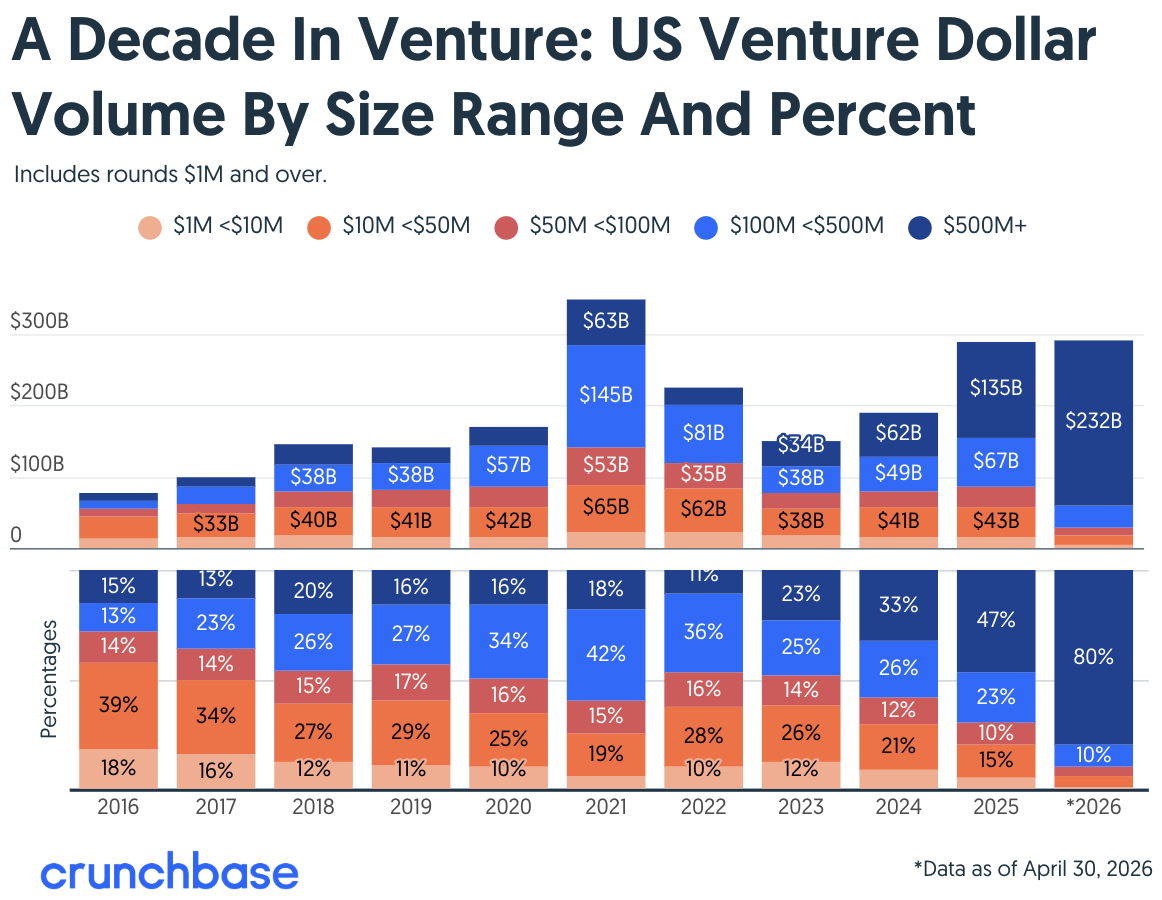
Capital concentration in venture capital continues accelerating, with funding increasingly flowing to a small group of dominant private companies. In 2025, 70% of all U.S. venture funding, more than $200B, went to just 389 companies raising rounds above $100M, while $90B flowed to only six companies that each raised more than $5B. By comparison, roughly 6,000 startups split the remaining $88B in funding
The trend intensified further in 2026, with 80% of U.S. startup investment through April going to rounds above $500M across just 29 companies
While smaller startups still saw modest funding growth overall, capital is becoming increasingly concentrated among a small group of frontier AI companies
Investors are now debating whether the dominance of companies like OpenAI and Anthropic will crowd out smaller startups or create new opportunities across the broader AI ecosystem

ECONOMIC SNAPSHOT
How much damage has the Iran war done to the US economy (CNN, 3 minute read)
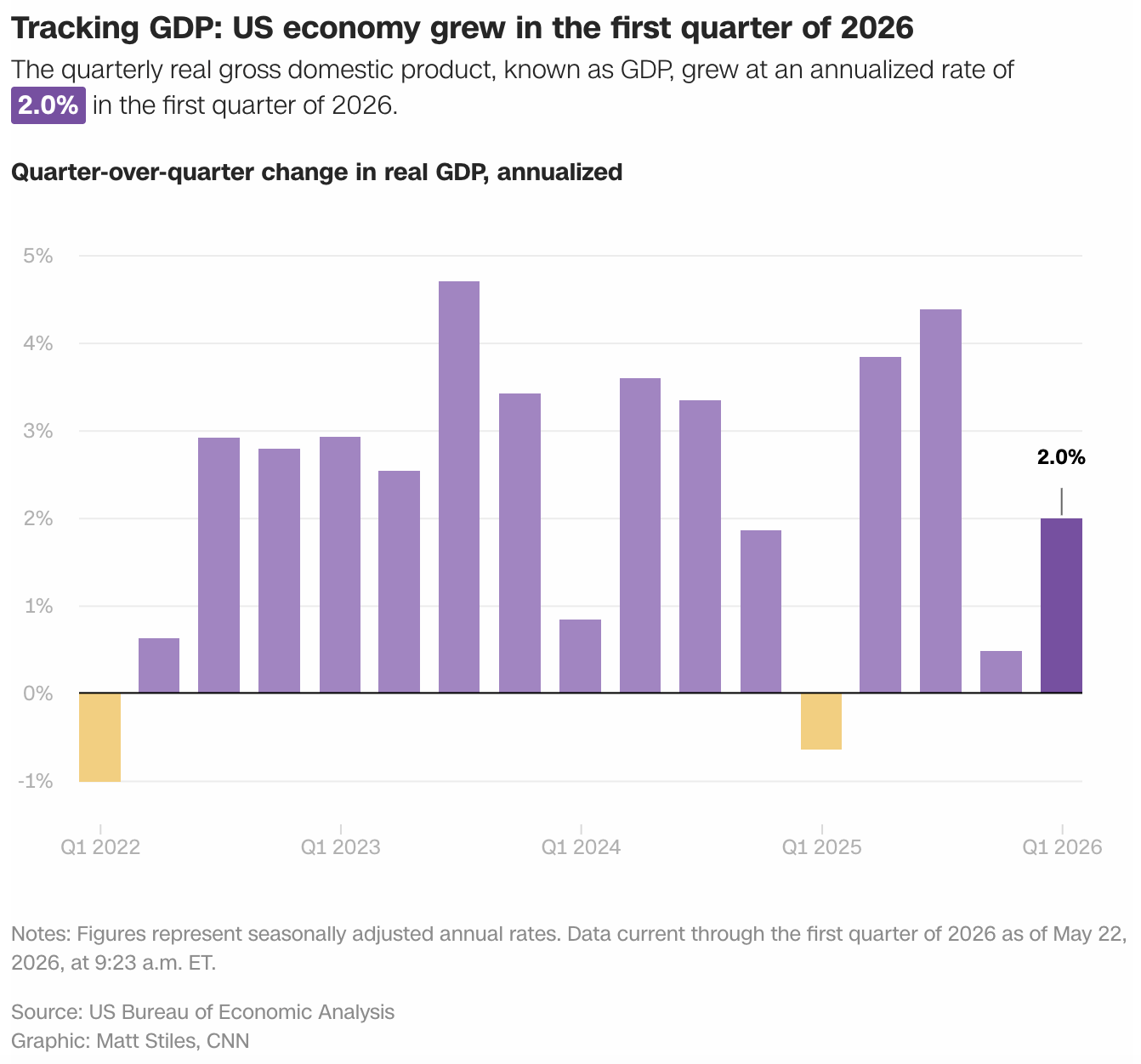
The U.S. economy remains resilient despite rising pressure from the Iran war, elevated energy prices, and weakening consumer sentiment. Oil and gas prices have climbed to four-year highs, helping push inflation to 3.8%, its highest level in three years, while average gasoline prices rose above $4.50 per gallon. Inflation has now outpaced wage growth for the first time since 2023, effectively erasing real pay gains for many households. Despite that pressure, broader economic indicators have remained relatively stable:
Unemployment stayed near 4.3%, job growth remained strong, and retail spending continued rising, with core retail sales up nearly 0.5% in April
Rising costs are also spreading across the economy, with food prices up 3.2% year-over-year and airfares jumping 20.7%
Higher Treasury yields are increasing pressure on mortgages and housing affordability, while inflation continues hitting lower-income households hardest
New York Fed warns about $69 trillion foreign investment ‘burden’ on U.S. economy (Fortune, 6 minute read)
Federal Reserve economists are warning that the U.S.’s long-standing financial advantage as a global debtor is weakening as foreign ownership of American assets continues rising. Overseas investors now hold nearly $69T in U.S. assets, compared to $41T in foreign assets owned by Americans, leaving the U.S. with a negative international investment position of roughly $28T. For years, the U.S. offset that imbalance because American investors earned higher returns abroad, generating a net investment income surplus of $260B in 2019
However, that advantage has largely disappeared over the past two years as rising interest rates, higher foreign ownership of U.S. stocks, and persistent trade deficits increased capital outflows
Since 2019, the U.S. international deficit has worsened by roughly $16T, while foreign investors now own about 18% of the U.S. stock market
Higher interest rates are increasing payments flowing overseas, with the Fed estimating that every 1-point rate increase reduces U.S. net income by roughly $150B
US consumers face looming spending squeeze as Trump tax rebates fade (Financial Times, 5 minute read)
U.S. consumers are facing growing financial pressure as tax-refund benefits fade and higher fuel prices linked to the Iran conflict continue pushing inflation higher. Tax refunds averaging nearly $3,500 helped support spending earlier this year, but economists warn those gains are being offset by rising gasoline and diesel costs after oil disruptions in the Strait of Hormuz pushed fuel prices up roughly 50%. Consumer sentiment has also weakened sharply, with surveys showing growing concerns about inflation, personal finances, and rising debt delinquencies across credit cards, auto loans, and student loans
Consumers account for about two-thirds of U.S. economic activity, making any slowdown in spending a major economic risk
Retail sales still rose 4.9% year-over-year in April, but much of the growth came from higher-income households, which benefited more from recent tax cuts and are less exposed to fuel costs
At the same time, inflation is once again outpacing wage growth, while grocery prices rose 2.9% and fruit and vegetable prices increased 6.1%
IPO & EXITS
BofA’s Hartnett Warns Mega-IPOs Risk Bubble Like Roaring ‘20s (Bloomberg, 5 minute read)
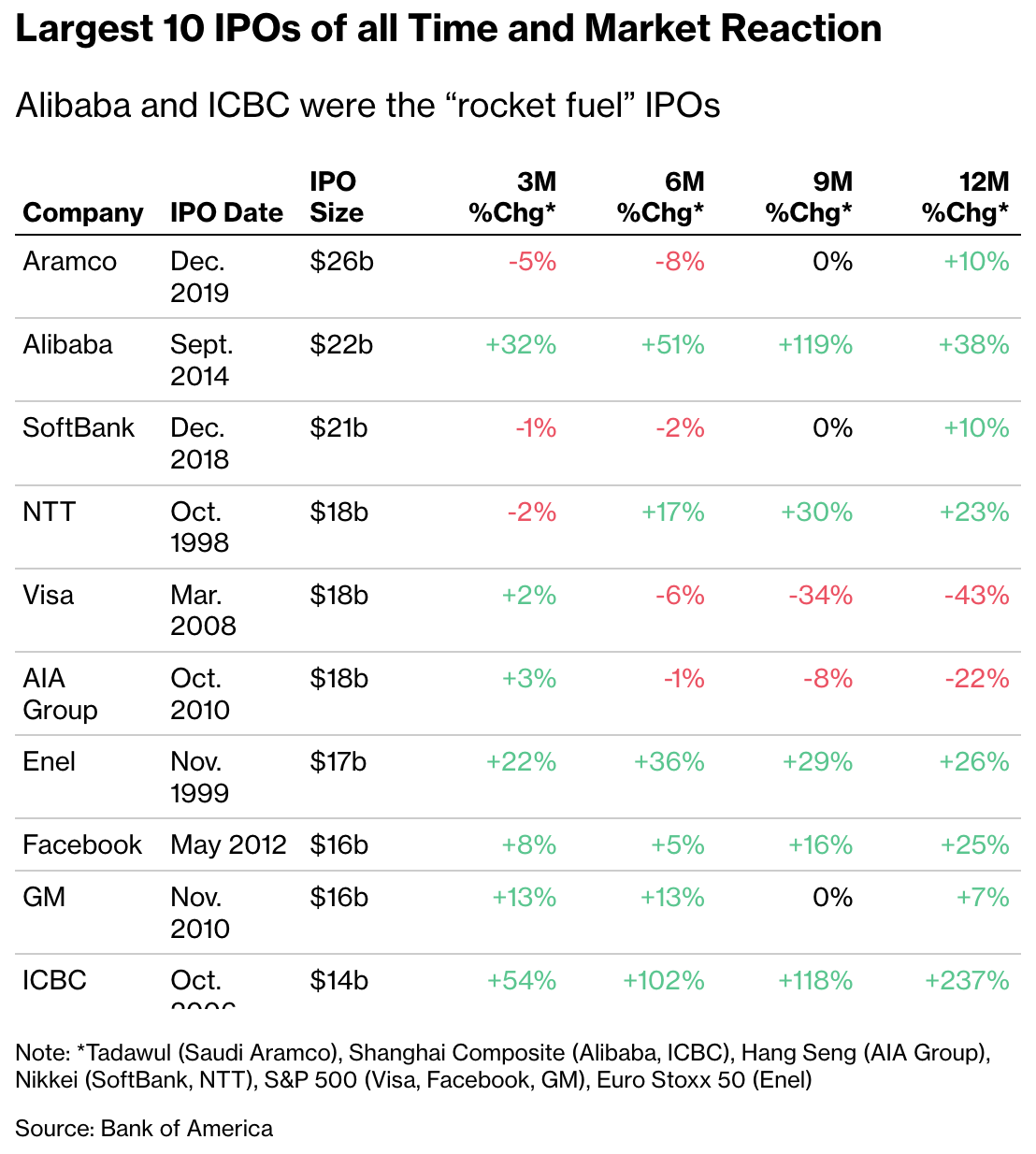
Mega IPOs from companies like SpaceX and OpenAI are raising concerns that the AI-driven stock-market rally may be approaching bubble-like levels of concentration. Technology companies already account for more than 44% of the S&P 500, and Bank of America estimates that upcoming AI IPOs could push market concentration toward 48%, exceeding levels seen during the dot-com bubble, Japan’s 1980s boom, and the Nifty Fifty era
Analysts warn that market performance is becoming increasingly dependent on a small group of AI companies
Rising Treasury yields and inflation are also pressuring high-growth valuations, with Bank of America noting that surging bond yields have historically preceded major market slowdowns
The firm also warned that extreme investor optimism could increase the risk of a broader market pullback if rates and inflation keep rising
The big questions looming over OpenAI’s trillion-dollar IPO (Fortune, 6 minute read)
OpenAI is reportedly preparing for a potential IPO that could value the company at up to $1T, potentially making it one of the largest public listings in history shortly after SpaceX’s expected IPO. Despite generating nearly $6B in Q1 revenue, OpenAI remains heavily unprofitable as it continues spending aggressively on data centers, chips, cloud infrastructure, and AI talent
Investors are expected to closely examine the company’s cash burn, profitability timeline, revenue mix, and the economics of serving AI models at scale
The filing could also reveal more about OpenAI’s ownership structure, including Microsoft’s roughly 27% stake, which could be worth around $270B at a trillion-dollar valuation
Analysts view the IPO as a major test of whether public markets are willing to continue financing the enormous capital demands of frontier AI companies
SpaceX's biggest IPO risks are also its bull case (Yahoo Finance, 3 minute read)
SpaceX’s IPO highlights how the company has evolved beyond rockets into a broader technology and infrastructure business spanning satellite internet, AI, telecommunications, lunar missions, and long-term Mars ambitions. Investors are closely focused on Starship, where SpaceX has already invested roughly $15B, including $3B in R&D during 2025, as the rocket is central to future Starlink expansion, NASA lunar missions, and potential space-based AI infrastructure
Meanwhile, Starlink has become the company’s main profit engine, generating $11.4B in 2025 revenue and $4.4B in operating income, while serving roughly 7.4 million devices monthly across about 30 countries
The IPO filing also revealed the growing role of AI through xAI and X, which generated $3.2B in AI revenue but posted a $6.4B operating loss alongside $12.7B in capital expenditures
Analysts view the IPO as a major test of whether markets are willing to finance Musk’s increasingly capital-intensive vision across space, connectivity, and AI infrastructure
A deleted disclosure in SpaceX’s S-1 reveals the real economics of its AI infrastructure (PitchBook, 4 minute read)
SpaceX’s IPO filing revealed that the company is increasingly positioning itself as an AI infrastructure business rather than just a space company. An earlier draft of the filing reportedly showed that SpaceX built its first Colossus II AI clusters at roughly $2.7M per megawatt, far below typical industry costs, while a disclosed $15B annual compute contract with Anthropic through 2029 suggests the company could recover AI infrastructure costs extremely quickly
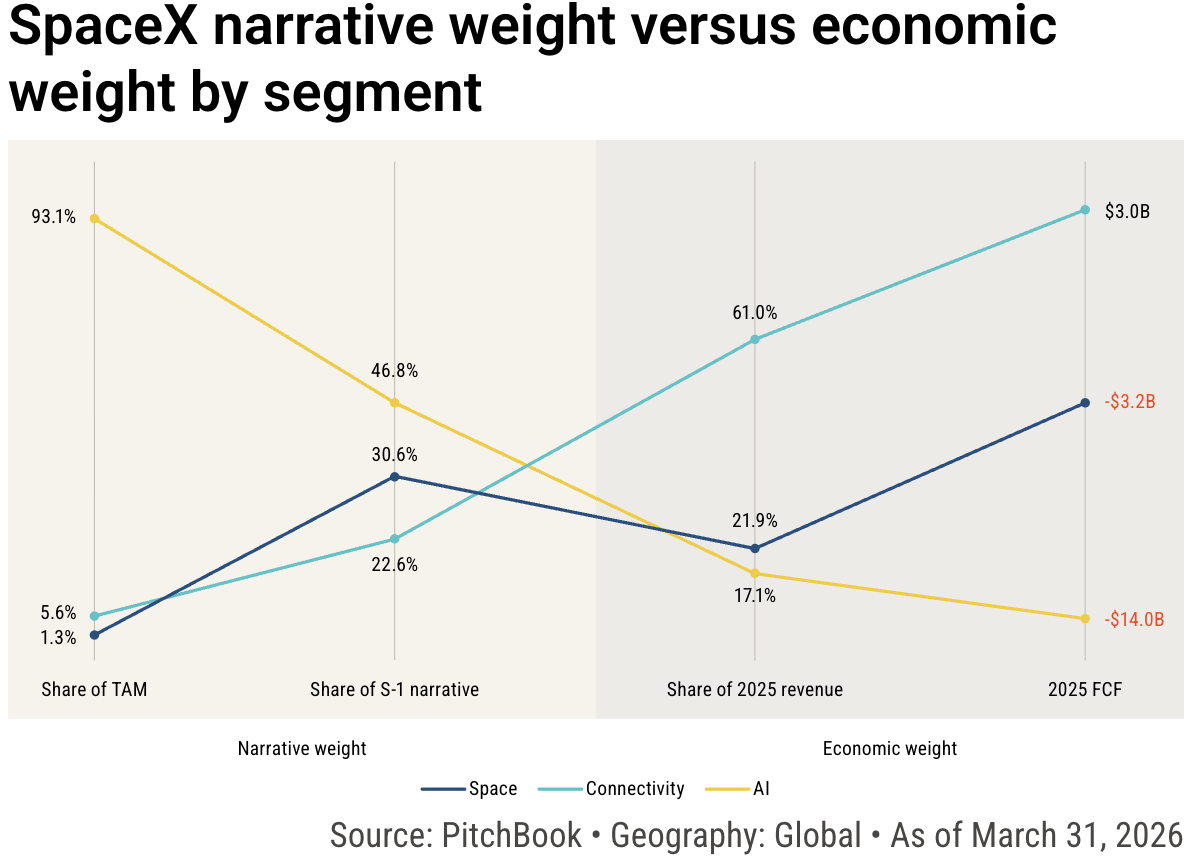
AI represented 47% of segment-specific language in the filing and accounted for 93% of SpaceX’s stated $28.5T market opportunity
However, the company still relies heavily on Starlink, which generated 61% of revenue and nearly all free cash flow in 2025 with a 63% EBITDA margin
The AI division generated just 6.7% of revenue and posted a $14B free-cash-flow loss in 2025
8alpha.ai is an AI fintech transforming cash-generating businesses into scalable, AI-powered companies. We provide revenue-based financing and hands-on AI transformation, delivering no zeros with unlimited upside. We’re the architects building financial infrastructure for the next generation of investors and startups.
Become part of our revolution.
Happy reading,
8alpha.ai’s Research & Investment Team