OpenAI vs. Apple: The AI Cold War?
Welcome to AI8’s weekly newsletter, your ultimate source for curated insights and updates from the dynamic world of venture capital!
From billion-dollar rounds to market-defining shifts, we deliver the intelligence powering the global investment landscape, moving investors and innovators forward. At 8alpha.ai, we’re not waiting for the future of capital, we’re building it. Stay sharp, stay curious, and stay ahead.
STARTUPS
ROUNDS AND UNICORNS
The Week’s 10 Biggest Funding Rounds: No Summer Doldrums As Dollars Still Flow To AI (Crunchbase, 5 minute read)
Fireworks AI (Enterprise AI): Raised $1.505 billion in a Series D led by Atreides Management, Index Ventures, and TCV, reaching a $17.5 billion valuation. The company develops enterprise AI tools that help organizations build specialized AI models using their proprietary data
Wonder (Food Delivery): Raised $650 million in a Series D at a $9 billion pre-money valuation. The company operates 140 meal delivery and kitchen locations and will use the funding to expand its operations
Chai Discovery (AI Drug Discovery): Raised $400 million in a Series C led by Index Ventures at a $3.8 billion valuation. The company uses AI to accelerate drug discovery and development
Walden Robotics (Robotics): Launched with $300 million in funding led by Toyota and Deviation Capital at a $1.1 billion valuation. The company develops general-purpose robots for manufacturing and logistics
Brinc (Drones): Raised $125 million in funding led by Motorola Solutions. The Seattle-based company develops drones for public safety and emergency response operations
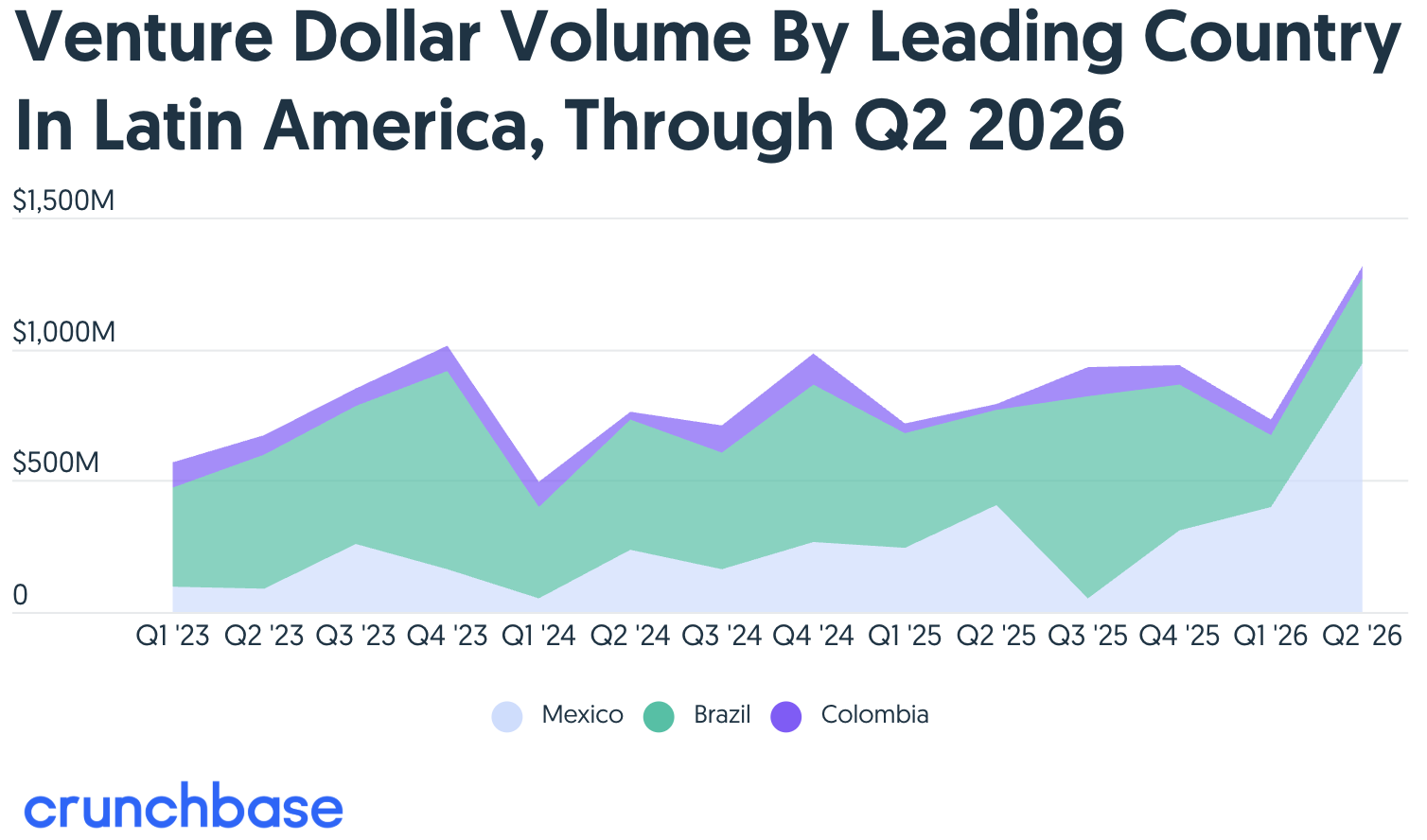
Mexico Extends Its Venture Lead Over Brazil As More Global VCs Enter Latin America (Crunchbase, 4 minute read)
Venture funding in Latin America reached $1.36 billion in Q2 2026, up 47% year over year and 22% quarter over quarter, driven by a surge in late-stage investments. Mexico led the region with $944 million raised, a 131% increase from Q2 2025 and 136% above Q1 2026, surpassing Brazil, which raised $350 million despite a 20% quarterly increase
Late-stage and growth funding accounted for $991 million (+84% YoY), while early-stage deal activity continued to decline
The quarter's largest financings included Clip ($500 million), Plata ($405 million), and Kavak ($300 million), highlighting continued interest from major U.S. investors such as Andreessen Horowitz, Founders Fund, and Bicycle Capital
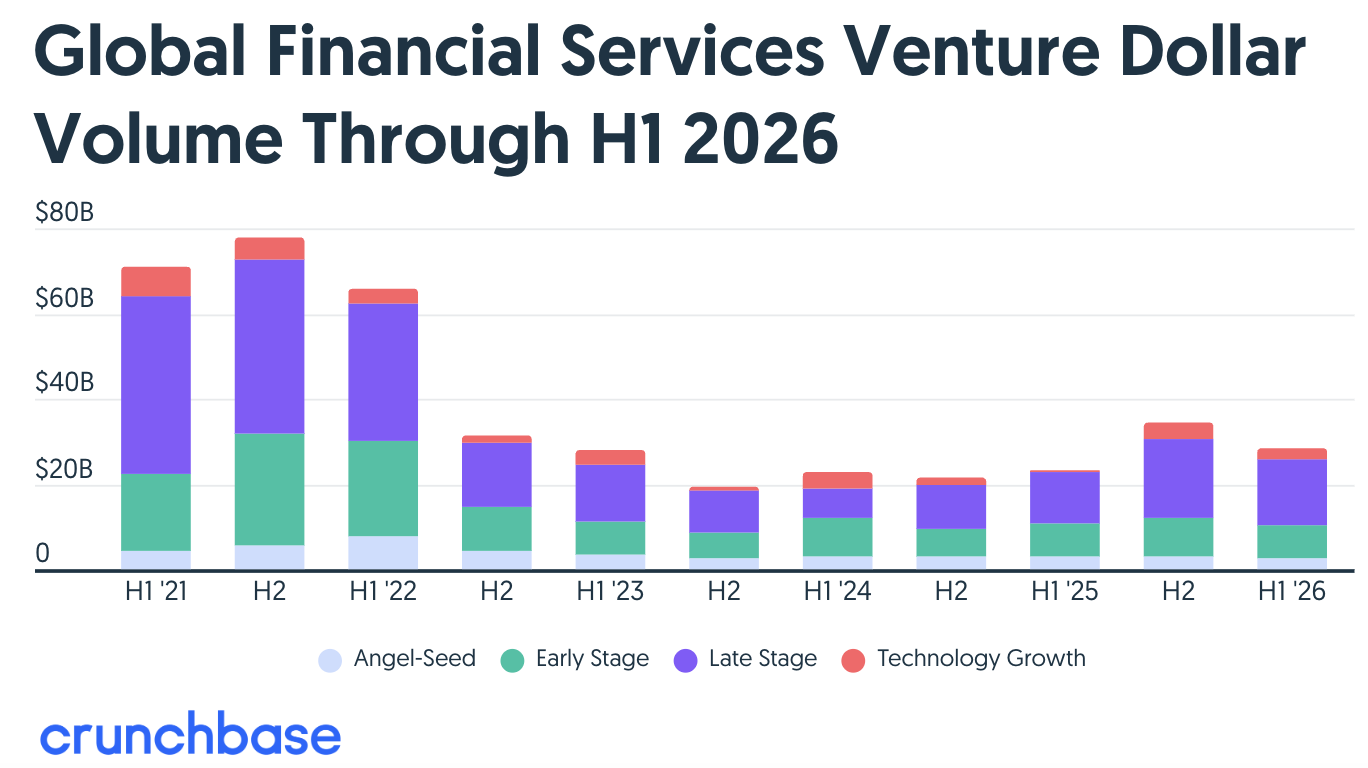
Fintech Funding Surges 23% In H1 2026 As Investors Concentrate Their Bets On AI And Financial Infrastructure (Crunchbase, 5 minute read)
Global fintech venture funding reached $28.6 billion in the first half of 2026, up 22.7% year over year, despite a 25.7% decline in deal count to 1,605 transactions, highlighting a continued shift toward fewer but significantly larger investments. The United States attracted more than half of global funding ($15 billion), followed by the United Kingdom ($2.7 billion) and India ($1.9 billion). Investors concentrated capital in AI-driven fintech leaders, particularly in wealth management, payments, and financial infrastructure, while traditional digital banking models lost favor
Stripe ($159B) and Ramp ($44B) remained private, reflecting strong private-market liquidity
Capital concentration and AI-driven mega-rounds are expected to continue, though cybersecurity, regulation, and IPO performance remain key risks
ECONOMIC SNAPSHOT
U.S. Treasury yields edge higher as Wall Street monitors Middle East tensions (CNBC, 2 minute read)
U.S. Treasury yields rose as investors responded to escalating tensions in the Middle East and monitored the outlook for the U.S. economy. The 10-year Treasury yield climbed to 4.58%, the 2-year yield rose to 4.21%, and the 30-year yield exceeded 5.09% following a ninth consecutive night of U.S. strikes against Iran, targeting military and coastal infrastructure
Recent economic data remained resilient, with weekly jobless claims at 208,000 and inflation continuing to cool
The figures reinforced expectations that the U.S. economy is withstanding recent price pressures
Investors are now focused on the upcoming S&P Global Flash PMI report for further signals on U.S. economic activity
Gas prices spiral over $4 as U.S.-Iran war heats up again, amid warning that ‘economic gravity’ will soon catch up to American families (Fortune, 3 minute read)
Escalating U.S.-Iran tensions are driving higher energy prices, increasing pressure on U.S. consumers and raising inflation risks. Gasoline prices climbed to $4.00 per gallon, up from $3.87 a week earlier and $3.14 a month ago, while Brent crude traded around $88 per barrel after briefly reaching $91. Although households have so far absorbed higher fuel costs by reducing savings rather than spending, economists warn this may not be sustainable if oil prices remain elevated
Markets expect oil futures to remain above $80 per barrel over the coming months
Analysts warn that further disruptions in the Middle East could push prices above $100 per barrel, complicating the Federal Reserve's efforts to bring inflation back to its 2% target
How AI Data Centers Are Reshaping America’s Economy, Politics, and Power Grid (The National Interest, 6 minute read)
AI is becoming a major driver of the U.S. economy, with AI infrastructure spending projected to reach $765 billion in 2026 (about 2% of GDP), exceed $1 trillion in 2027, and approach $3 trillion by 2035. At the same time, its rapid expansion is fueling political and social backlash over energy use, water consumption, environmental impacts, and jobs. The U.S. currently has 954 operating and 1,254 planned data centers, with planned power capacity rising from 42,853 MW to 342,456 MW
Public opposition is rising, with 71% of Americans opposing new AI data centers in their communities
Lawmakers are considering requiring tech companies to fund more power grid upgrades
Concerns persist over infrastructure risks and balancing AI growth with community impacts
Was the World Cup worth it? (CNN, 6 minute read)
Despite FIFA's projection of $30.5 billion in economic benefits and 185,000 U.S. jobs from the 2026 World Cup, early data suggests the tournament delivered a more limited economic impact. Tourism increased just 0.2% year over year, retail sales rose only 0.2% in June, and leisure and hospitality employment fell by 61,000 jobs, while hotel prices declined 2.8% and airline fares remained largely unchanged
Some host cities saw modest gains, with small business sales up 4.1%, but economists found little nationwide impact
The tournament generated modest financial returns, despite significant revenue for FIFA and stadium operators
However, it boosted interest in soccer and delivered difficult-to-measure social and cultural benefits
Why a modest US interest rate rise won’t change much for most businesses (The Guardian, 5 minute read)
A potential 25-basis-point Federal Reserve rate hike is expected to have a limited impact on most established small businesses. For example, the annual payment on a $500,000 five-year loan would increase by only about $716, making it unlikely to change investment or hiring decisions. Financing conditions also remain relatively strong, with small business loan approval rates at 52% (up from 46% in 2021) and venture capital funding rising 51% to $320 billion, driven largely by AI investments
Small business bankruptcies rose 67% year over year, reflecting persistent economic pressures
Despite these risks, major banks continue to describe the U.S. economy as resilient
Can an Apple lawsuit derail OpenAI’s hardware plans? (TechCrunch, 3 minute read)
Apple has sued OpenAI for allegedly encouraging current and former Apple employees to share trade secrets, allegations that OpenAI says are without merit. Apple claims that more than 400 former employees now work at OpenAI, underscoring a significant talent shift between the companies. The lawsuit could delay OpenAI's planned hardware expansion, including its rumored AI device developed with Jony Ive's team, and create uncertainty ahead of the company's expected IPO
The legal dispute could affect how investors value OpenAI's future hardware business
However, analysts believe the company's software operations remain its primary growth driver
Big banks' record Wall Street profits are increasingly tied to AI (Yahoo Finance, 3 minute read)
Wall Street's five largest banks, JPMorgan, Bank of America, Citigroup, Goldman Sachs, and Morgan Stanley, generated a record $114 billion in capital markets revenue during the first half of 2026, a 31.5% year-over-year increase, driven largely by the AI investment boom. More than half of the revenue growth came from equities trading, while AI-related IPOs, equity offerings, and financing activity boosted underwriting, advisory, and wealth management businesses. Executives across the industry described AI as the primary driver of current earnings, though they cautioned that the investment cycle could face volatility as it matures
Goldman Sachs added $7.1 billion in capital markets revenue, helped by SpaceX's IPO and Alphabet's equity raise
Morgan Stanley estimates AI infrastructure spending could reach $10 trillion, with the cycle only 10%–15% complete
Banks expect more AI IPOs, including Anthropic and OpenAI, but warned that slower AI investment could pressure future revenues
Trump administration’s head of AI safety agency resigns after 3 months on job (CNBC, 5 minute read)
Chris Fall resigned as director of the U.S. Center for AI Standards and Innovation just three months after being appointed in April, creating further uncertainty around the Trump administration's AI leadership after former White House AI and crypto czar David Sacks stepped down in March without a replacement. The leadership change comes as the administration rolls out a more active AI regulatory framework, including a June executive order requiring developers to voluntarily submit advanced AI models for government evaluation and giving federal agencies 60 days to establish testing standards
The transition comes as Chinese AI competition intensifies, with Moonshot AI claiming its Kimi K3 model rivals leading systems from OpenAI and Anthropic
Meanwhile, the White House launched the Gold Eagle clearinghouse to oversee AI cybersecurity and access to advanced AI models
IPO & EXITS
Stripe’s Acquisition Pace Has Accelerated In The Past Five Years, But Nothing Comes Close To Its Reported $53B PayPal Bet (Crunchbase, 3 minute read)
Stripe and Advent International have reportedly offered more than $53 billion to acquire PayPal, potentially creating one of the largest technology acquisitions in recent years. The acquisition would mark Stripe's most ambitious expansion yet
The fintech giant is valued at $159 billion, has raised $10.4 billion, and has acquired 21 companies since its founding
If completed, the transaction would rank among the largest U.S. tech acquisitions of the past five years
SpaceX stock closes below its IPO price for the first time since it went public (NBC, 4 minute read)
SpaceX shares have fallen sharply since their June IPO, closing at $131.11, below the $135 IPO price, after dropping more than 3% and falling as low as $124 in after-hours trading following the delay of its first post-IPO Starship launch. After initially surging 19% to $193 on its first trading day, the stock has declined nearly every session since, despite joining the Nasdaq 100 and Russell 1000 indexes
The company has also issued $25 billion in additional debt after raising $75 billion through its IPO, while short interest has climbed to nearly $4 billion
SpaceX's market value has fallen by more than $1.2 trillion from its peak, while Elon Musk's net worth has declined from $1.32 trillion to about $850 billion
Despite the recent selloff, analysts remain optimistic about the company's long-term growth prospects
8alpha.ai is an AI fintech transforming cash-generating businesses into scalable, AI-powered companies. We provide revenue-based financing and hands-on AI transformation, delivering no zeros with unlimited upside. We’re the architects building financial infrastructure for the next generation of investors and startups.
Become part of our revolution.
Happy reading,
8alpha.ai’s Research & Investment Team